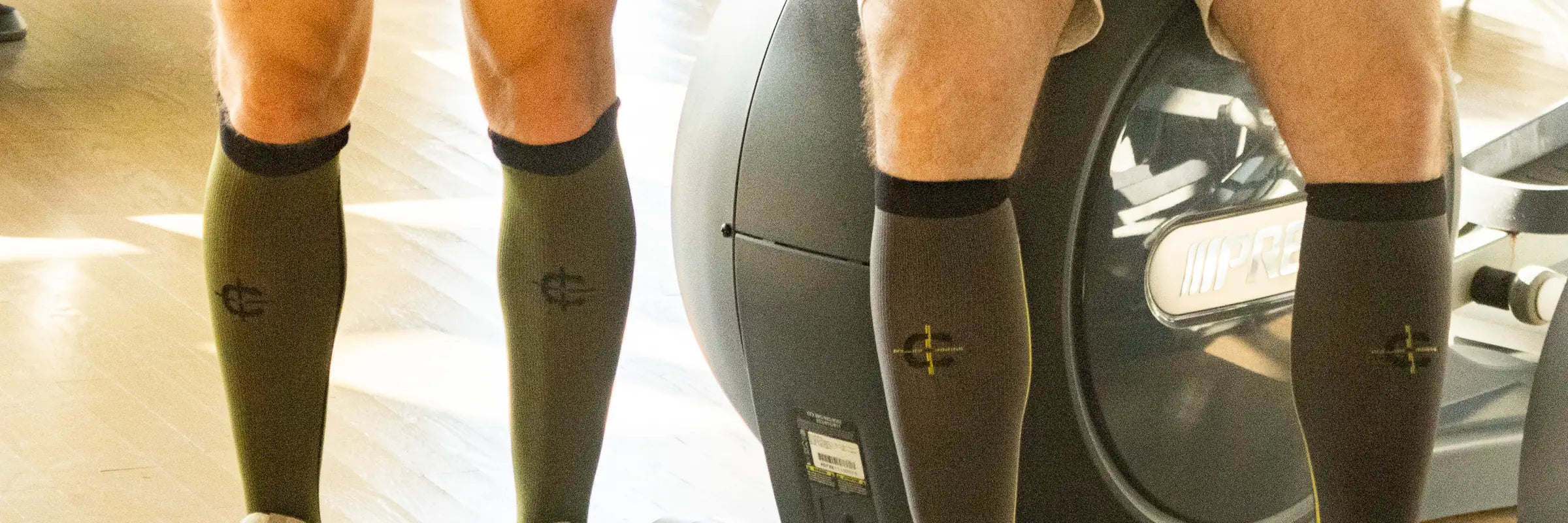
If you spend serious time on your feet-running trails, rucking under load, hiking rough terrain, or training hard in the gym-you already know that what goes on your feet matters as much as what goes on the barbell. Sports compression socks are purpose-built to keep your legs working longer, recovering faster, and staying protected mile after mile. Here's everything you need to know to find the right pair.
Key Takeaways
- Sports compression socks are designed to boost performance, stability, and recovery during running, rucking, hiking, and training. They are athletic gear, not medical devices, and this article covers only the sports and athletic side of compression.
- Covert Threads focuses on rugged, USA-made athletic compression socks and sleeves engineered using experience with the intense training the military is known for-gear built to perform when the stakes are highest.
- Three featured products cover every need: the over-the-calf Endurance Graduated Compression Sock, the Endurance Compression Sleeve, and the Marauder crew sock with targeted ankle support.
- These are sports and athletic compression socks only. Unlike medical compression socks-which are rated by pressure units and prescribed by a doctor for circulatory conditions-sports compression socks are built around zone-specific support, material performance, and durability for athletes.
- Correct fit matters. Always use a size chart, measure your calf, and choose the right height (crew vs. knee high) to get the benefits without discomfort.
What Are Sports Compression Socks (and What They're Not)?
Sports compression socks are performance socks with snug, purpose-built support zones for the foot, ankle, and lower leg. Athletes wear them during running, rucking, hiking, lifting, and tactical training to improve stability, reduce fatigue, and protect against blisters and hot spots.
This article covers only athletic and sports compression socks. Medical compression socks are a different product category altogether. Medical-grade socks typically provide 15-30 mmHg of pressure, with 20-30 mmHg considered the most effective compression range for therapeutic support. Brands like LEVSOX's Compression Socks are rated 20-30 mmHg for support, CEP's Run 4.0 Compression Socks offer 20-30 mmHg pressure, and SockWell's Elevation Firm Socks provide 20-30 mmHg compression-all designed with medical applications in mind. Sports compression socks, by contrast, are engineered around targeted zones, material science, and durability rather than specific pressure ratings. If you have medical questions about circulation or swelling, talk to your doctor.
So how do compression socks differ from standard athletic socks? The material is more structured. The fit is tighter around the arch and ankle. And reinforced zones provide stability under load that a standard cotton or polyester crew sock simply can't deliver.
Covert Threads develops compression socks specifically for high-intensity athletic activities, drawing on the company's lineage with difficult military training. That experience shapes every decision-from fiber selection to compression panel placement.
Graduated compression socks are the most common style in sports use. In plain language, they're snugger at the ankle and gradually ease up toward the calf, helping blood flow upward and keeping your legs feeling lighter during long efforts.
How Sports Compression Socks Work During Training and Missions
Compression socks assist the muscles and soft tissue of your lower leg by providing gentle, consistent support while you move. Here's what's happening under the fabric:
- Blood flow support. Graduated compression socks help veins circulate blood back to the heart by applying just the right amount of tightness at the ankle and progressively less pressure up the calf. In everyday athletic terms, this helps your legs feel lighter on long runs or rucks. Wearing them improves circulation and reduces swelling during hours of activity.
- Foot and ankle stabilization. Snug fabric around the arch and ankle reduces excessive movement inside the boot or shoe, which is the root cause of most hot spots and blisters on long days. Less internal sloshing means less friction where your feet meet the material.
- Muscle vibration reduction. Every foot strike during running, jumping, or fast descents sends shock waves through your lower leg. Compression socks reduce muscle vibration linked to fatigue, meaning your muscles spend less energy dampening unnecessary motion and more energy moving you forward.
- Improved proprioception. Compression socks improve proprioception in your lower legs and feet-the close fit helps you "feel" foot placement better on uneven ground. This is especially helpful for trail runners, hikers and backpackers, and ruckers navigating unpredictable terrain.
- Moisture management. Better-quality compression socks use technical fibers, like the cool-wicking stretch nylon in the Covert Threads Endurance Graduated Compression Socks, to wick sweat away from the skin. Moisture-wicking fabrics help reduce friction and keep feet dry, which is critical for maintaining skin integrity under heavy use.
Key Benefits of Wearing Compression Socks for Sports and Outdoor Use
The core benefits come down to support, endurance, comfort, and protection in demanding environments.
- Performance and endurance. When you wear compression socks during long runs, loaded marches, or multi-hour training blocks, your legs tend to feel fresher for longer. Graduated compression socks help reduce muscle fatigue during sports, allowing athletes to hold pace further into a workout or mission. Graduated compression also reduces muscle fatigue during high-impact activities like sprinting and plyometrics.
- Stability and injury risk reduction. Targeted compression at the ankle and arch-like in the Marauder-supports joints during cuts, sprints, and descents. This helps reduce rolled ankles, arch strain, and the kind of moderate wear-and-tear that accumulates over weeks of training. Graduated compression helps prevent shin splints and calf fatigue, two of the most common complaints among runners and ruckers.
- Recovery between sessions. Wearing compression socks post-workout can decrease delayed onset muscle soreness, helping you feel less wrecked the next day. Many athletes continue to wear compression socks after a hard session, race, or long patrol to reduce leg heaviness and make the next day's movement more comfortable. Compression socks improve circulation and reduce swelling in legs, which plays a direct role in that recovery experience.
- Blister and hot spot prevention. The snug fit, combined with low-friction yarns and moisture-wicking fabric, means fewer blisters on common pressure points-heel, toes, and ball of the foot.
- Thermal comfort. Well-designed compression socks manage both heat and cold, keeping feet warm in cold weather yet breathable enough for hot, humid training ranges. The right material blend prevents your feet from cooking in the heat or going numb in the cold.
- Durability. Covert Threads compression socks are built to withstand repeated field washings, rough terrain, and long wear under heavy boots without losing their shape or support. That kind of longevity means your purchase holds its worth over months of hard use.
Types of Athletic Compression: Over-the-Calf, Sleeves, and Crew-Length
Athletes can choose between full socks (over-the-calf, knee high, crew) and stand-alone calf sleeves depending on their sport, footwear, and activity demands.
|
Style |
Coverage |
Best For |
|---|---|---|
|
Over-the-calf / Knee high |
Foot, ankle, full calf |
Long runs, rucks, all-day duty |
|
Compression sleeve |
Calf only |
Track work, gym sessions, under uniform socks |
|
Crew-length |
Foot, ankle, mid-calf |
Fast-paced training, mid-cut boots, trail shoes |
- Over-the-calf / compression knee high socks. These cover foot, ankle, and entire calf, offering full-length support. Full-length knee-high compression socks are ideal for running and endurance activities. The Covert Threads Endurance Graduated Compression Sock is designed as a knee high, over-the-calf option engineered for exactly these scenarios.
- Graduated compression socks. These provide more snugness at the ankle and gradually ease toward the top-ideal for long runs, rucks, and anytime you're on your feet for hours.
- Compression sleeves. Calf sleeves offer support while allowing for natural movement of the feet. The Covert Threads Endurance Compression Sleeve is ideal for athletes who prefer their usual running socks but want extra calf support for distance runs, track work, or under uniform socks.
- Crew-length compression socks. Mid-calf options like the Covert Threads Marauder combine targeted compression zones and ankle support with a length that pairs well with low or mid-cut boots and trail shoes.
Each style has trade-offs. Over-the-calf socks offer the most coverage but can trap more heat. Sleeves give flexibility in sock choice but skip foot compression. Crew-length socks are the most versatile for women and men who rotate between boots and trail shoes.
Core Features to Look For in Sports Compression Socks
Think of this as your buyer's checklist-the features that matter most for athletes, tactical users, and anyone logging serious miles.
- Compression design. Look for true graduated compression socks or well-mapped targeted compression panels, not just generic "tight" socks. The tightness should feel snug but not restrictive. You want confidence in the support, not a tourniquet.
- Height. Pick crew, over-the-calf, or sleeves based on your footwear (trail runner vs. combat boot), terrain, and any uniform regulations. For skiing or cold-weather missions, over-the-calf styles keep warmth locked in.
- Materials. Prioritize high-performance fibers: nylon for structure and durability, polyamide for abrasion resistance, merino wool blends for temperature regulation and odor control, and spandex for stretch. Unlike cotton, these synthetics wick moisture and dry fast. Covert Threads draws on deep experience designing for hot deserts, humid jungles, and cold climates.
- Cushioning and support zones. Choose socks with strategic cushioning at the heel and forefoot plus firm arch and ankle bands for stability, rather than thick padding everywhere that can trap heat.
- Seam construction. Smooth or flat toe seams and reinforced heels prevent rubbing during long marches and long-distance runs. This is an easy detail to overlook-and a painful one to learn the hard way.
- Durability and wash resistance. Tactical users should find socks that keep their compression and shape after repeated machine wash cycles and field use.
- Made in USA. Covert Threads manufactures in the USA and engineers compression socks specifically for demanding military and outdoor use, differentiating from mass-market brands that cut corners on materials or construction.
How to Choose the Right Fit and Size (Including Size Charts)
Compression socks should be properly fitted to avoid discomfort. A sock that's too tight creates pressure points; too loose, and you lose the benefits entirely.
- Use the size chart. Match your foot size, calf circumference, and sometimes lower-leg length to the brand's recommended sizes. Don't guess-grab a tape measure. Most fit problems come from skipping this step.
- Knee high and over-the-calf socks should sit with the top cuff just below the bend of the knee without folding or rolling. Socks that are too long can bunch and create pressure points behind the knee.
- Crew-length socks like the Marauder should land mid-calf, not on the widest part of the calf where they may dig in. The fit should be close but comfortable throughout.
- Between sizes? Follow the brand's specific instructions, generally favoring the size that matches your calf measurement most closely for compression socks. That calf measurement is more important than foot length for determining compression fit.
- Boot wearers may prefer slightly more room in the toe box for long missions, while still ensuring the arch and ankle compression zones contact the skin properly.
When and How to Wear Compression Socks for Sports
Athletes can wear compression socks both during activity and after training for support and comfort. Usage should always feel comfortable and non-restrictive.
- During activity. Use over-the-calf or crew-length compression socks for long runs, rucks, loaded hikes, and high-intensity field workouts to support the lower leg and reduce fatigue across hours of effort.
- Post-training and travel. Many athletes choose to wear compression socks on the drive home, during long flights, or later in the day after a hard session. Wearing compression socks post-run aids in faster recovery-legs simply feel less heavy. Thanks to the gentle support, travel days and rest days both benefit.
- Sport-specific examples. Trail runners might grab the Endurance Graduated Compression Sock for steep descents. Ruckers might pick the Marauder for ankle support under mid-height boots. Lifters might wear the Endurance Compression Sleeve during squat days when they want calf support without changing their foot setup.
- How long to wear. Follow brand guidance and personal comfort. Remove socks if you ever feel numbness, tingling, or excessive pressure. There is no single answer that fits every athlete-learn what works for your body.
- New users: test compression socks on shorter workouts first before committing to all-day use during races, field exercises, or duty shifts. You'll quickly notice whether the fit and style are right for you.
Covert Threads Compression Lineup for Athletes and Tactical Users
Covert Threads is a USA-based designer of mission-ready socks and apparel built for athletes who need great gear that performs when it matters most. Every product reflects the company's roots in military-grade design and manufacturing.
- The Endurance Graduated Compression Sock is a knee high, over-the-calf graduated compression sock engineered for long-distance running, rucks, and all-day duty. It features a supportive calf design, cushioned footbed, and cool-wicking stretch nylon construction to keep your legs fresh and your feet dry.
- The Endurance Compression Sleeve pairs with your favorite performance socks to add focused lower-leg support. It's ideal for runners, ruckers, and lifters who love the flexibility to choose their own sock while still getting calf compression where it counts.
- The Marauder Crew Compression Sock is a crew-length, targeted compression sock with enhanced ankle and arch support. It's designed for fast-paced training, agility work, and use with mid-height boots and trail shoes, with a focus on stability and blister prevention.
All three options are built for high mileage, heavy loads, and repeated washing-making them a smart product choice for both daily training and extended field use.
Care, Maintenance, and Longevity of Compression Socks
Good care keeps your compression socks delivering results for months of intense use.
- Washing. Turn socks inside out, wash in cold or warm water with mild detergent. Avoid fabric softeners-they coat fibers and reduce moisture-wicking and elasticity.
- Drying. Air-dry flat or hang instead of running on high heat in the dryer. High heat breaks down elastic fibers faster than anything else. Low-heat tumble drying may be acceptable if brand guidelines allow it.
- Rotation. Keep multiple pairs in rotation so each pair has time to recover its shape between wears, extending the life of the compression zones.
- When to replace. Look for loose fit around ankle or arch, sagging cuffs, thinning fabric on heel or ball of foot, or visible elastic damage. If the compression feels moderate when it used to feel snug, it's time.
- Storage. Store socks flat or loosely rolled rather than tightly balling them up to avoid overstretching cuffs and compression panels.
Frequently Asked Questions
Can I wear compression socks every day for sports and training?
Many athletes and first responders wear sports compression socks daily for training, duty, and recovery without any issues, as long as the socks fit correctly and feel comfortable. Remove them if you experience pain, numbness, or tingling, and always follow the brand's fit guidance rather than forcing an overly tight size. This article covers athletic use only and does not replace medical advice-readers with health concerns should consult a healthcare professional.
Are graduated compression socks better than regular sports socks for running and rucking?
For many runners and ruckers, graduated compression socks offer extra support and a more "locked-in" feel compared to standard sports socks, especially over long distances. Benefits include reduced muscle vibration, better stability on uneven terrain, and improved comfort in the lower leg during and after intense sessions. Personal preference matters-some athletes prefer full graduated socks like the Endurance, while others combine regular socks with a compression sleeve.
How tight should sports compression socks feel?
The ideal fit is snug and supportive, especially around the foot, ankle, and lower calf, but never painful or cutting into the skin. You should be able to move your toes freely and should not see deep marks or discoloration where the cuff sits after normal wear. If the price of comfort is re-checking the size chart and measuring your calf, it's an easy investment. Try a different size or style if the socks feel uncomfortably tight or too loose.
Can I wear compression sleeves instead of full compression socks?
Compression sleeves focus on the calf only, making them a good option for athletes who love their current performance socks but want more lower-leg support. Sleeves shine during track workouts, gym sessions, and under uniform socks that already handle moisture and friction well. However, sleeves do not provide foot and ankle compression on their own, so athletes wanting full support under boots or trail shoes may prefer a complete compression sock like the Marauder or Endurance.
Are sports compression socks only for elite athletes?
Not at all. Sports compression socks are useful for everyday runners, weekend hikers, new recruits, and anyone who spends long hours on their feet. Beginners often appreciate the extra stability and comfort as they ramp up mileage or training volume. You don't need to be elite to benefit from better socks-well-designed compression gear simply helps you get more from every mile and every mission. Click through the Covert Threads lineup to plan your next purchase and find the styles and colors that fit your training.