
Key Takeaways
- Hunting socks and hiking socks overlap, because most hunts involve time spent hiking, even if the hunt includes long periods of waiting.
- The right hunting sock depends on three factors: how much you hike, how long you stay stationary, and the climate conditions you’ll face.
- Pursuit-style hunts require socks that prioritize cushioning, breathability, moisture control, and durability over insulation.
- Hunts that mix long hikes with long waits need a balance of impact protection, moisture wicking, and insulation for idle periods.
- Short-hike, long-wait hunts benefit most from thicker, insulating socks that keep feet warm and dry while standing or sitting still.
- Climate plays a major role, as moisture, temperature, and terrain all affect comfort and performance in the field.
- Matching sock design to hunting conditions helps prevent blisters, manage sweat, and keep your feet comfortable during long days outdoors.
- Compression fit in hunting socks can help reduce fatigue and provide support during long hunts.
- Over the Calf (OTC)/Knee-high socks offer extra warmth and protection, especially in cold or brushy conditions.
- Selecting the right pair of socks for each hunting scenario—such as cold weather, stalking, or hot weather—ensures optimal performance.
- Durable socks are essential for withstanding tough hunting conditions and years of prolonged use.
Introduction
When selecting hunting socks, it helps to understand that there is a lot of overlap between hunting socks and hiking socks. This is because you generally either need to hike to get to your hunting area, or you will be actively hiking as you hunt.
Merino wool socks are a top choice for hunting because Merino Wool naturally wicks away sweat, moisture, and odor, keeping feet at the right temperature in any weather.
In this guide, we break down how to select the right hunting socks for your specific hunt. To help guide your selection, we focus on how activity level and climate affect what your feet actually need.
We’ll start by explaining that it helps to break hunting sock selection down by the type of game you are after and the conditions you’ll face on the hunt.
From there, we’ll further break hunting sock selection down into three common scenarios—based on how much hiking you’ll do, how long you’ll be stationary, and what climate conditions you’ll encounter—so you can find the right sock for the conditions you expect.
How to Break Down Hunting Sock Selection
The best way to choose hunting socks is to break the decision down by two main factors: how much hiking your hunt requires, how much time you’ll spend stationary, and the climate conditions you’ll face.
For example, if you’re hunting mountain lions, you’ll likely be moving almost constantly as you track game over long distances. Elk hunting also involves a lot of hiking, but it often also includes long periods of standing or sitting still once you reach your hunting spot. Deer hunting is different again, where the hike may be shorter, but you’ll often remain idle in a tree stand or blind for extended periods.
Climate plays an equally important role. Consider that a duck hunter in Florida may deal with excessive moisture and humidity, and very warm conditions. Meanwhile, a mountain lion hunter in Utah may face steep terrain, dry air, and large elevation changes.
These differences affect how we consider factors like insulation, breathability, moisture control, and cushioning.
To make this even more clear and sock selection easier, we break hunting into three common scenarios. In each one, we consider both the physical demands of the hike and the climate conditions you’re likely to encounter, so you can choose hunting socks that keep your feet comfortable and performing well in the field.
Hunting with a Long Hike
Some hunts require a long hike to reach your hunting grounds, but then you never really stop moving, even after you arrive. These types of hunts often involve tracking game over long distances, with very little time spent standing still. Mountain lion and bear hunts are good examples of this kind of pursuit-style hunting.
Because you’re moving almost constantly, cold is slightly less of a concern than it is in other hunting scenarios. Your body is generating heat, so insulation matters less than cushioning and durability. Your socks need to excel at handling repeated impacts during long miles on your feet.
For long-hike hunts, we look for hunting socks that provide targeted cushion in high-impact areas. Cushioning in the heel, ball of the foot, and around the Achilles helps absorb shock and reduce fatigue over long distances.
Breathability and moisture-wicking properties are also important to keep sweat from building up and causing blisters as you walk long distances. High-performance hunting socks often use moisture-wicking polyester blends and Merin wool, to keep feet dry, cool, and comfortable—read this article to learn more about the benefits of Merino wool socks.
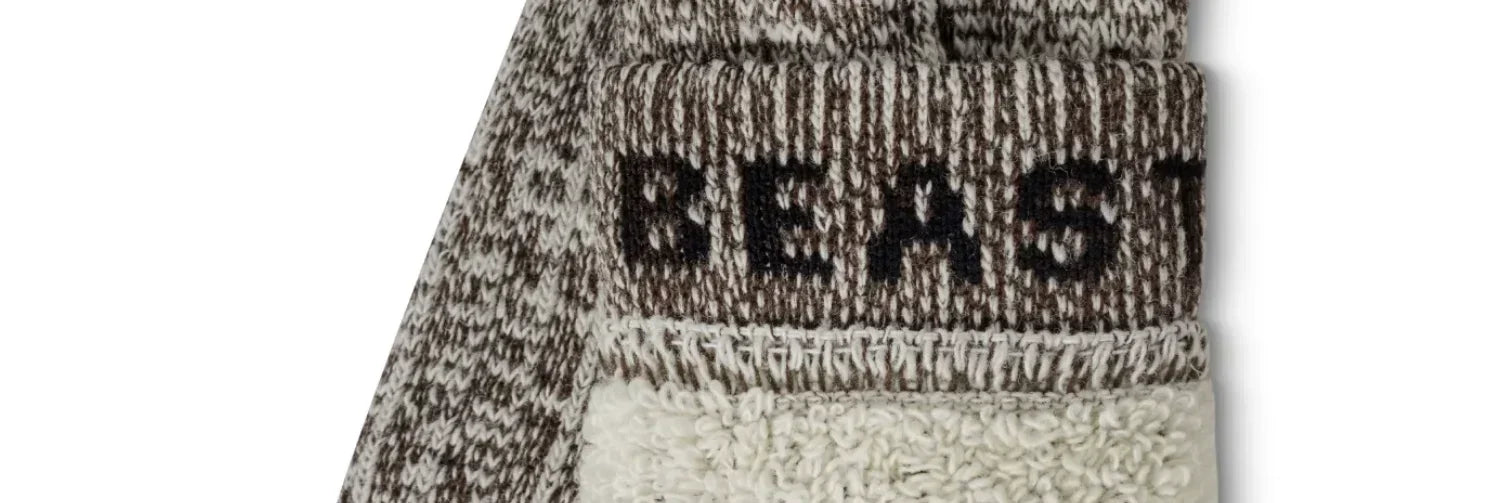
In cold conditions, socks like the Wool Beast OTC or the Ice Sock offer the right balance of cushioning and temperature control without excessive bulk.
In warmer environments, options like the Covert Threads Desert Sock or the Covert Threads Rock Infiltrator provide durability, moisture control, and impact protection while staying breathable during long days of steady movement.
Hunting with a Long hike and a Long Wait
Some hunts require a long hike to reach your hunting area, but are then followed by long periods of standing or sitting still once you get there. Hunting prey like Elk, mule deer, and mountain goat for example, requires a long hike, similar to pursuit-style hunts mentioned above. But that hike is likely to be followed by long periods of standing or sitting still once you arrive at your hunting grounds.
Because of this mix of activity and inactivity, sock selection needs to account for both phases of the hunt. Like long-hike hunts, cushioning in high-impact areas such as the heel, ball of the foot, and Achilles is still important to manage foot fatigue during the hike in. Maintaining temperature becomes a much bigger factor once you stop moving.
Sock thickness directly affects insulation, which matters during long periods of inactivity in both cold and warm conditions.
Cold environments make the need for thicker insulation when idle obvious, helping you stay warm during long wait. But you should also consider thickness in warmer climates, so that your feet do not stay too hot and uncomfortable. The right sock combination helps keep your feet at just the right temperature during both active and idle phases.
Also consider that Knee-high socks—or Over the Calf (OTC) socks, as we call them at Covert Threads—can also provide extra warmth and protection, especially in cold or demanding outdoor conditions.
Standing still after a long hike can also lead to chilled feet in cold conditions if moisture isn’t managed properly. In hot conditions, poor moisture management can leave your feet feeling damp and gross. That’s why moisture-wicking performance is also critical—your socks need to pull sweat away from your skin after the hike so your feet stay comfortable while you wait.
In cold conditions, the Covert Threads Ice Sock or the Covert Threads Wool Beast Heavy OTC Sock provide the insulation and cushioning needed for both the hike and the long wait.
In warmer conditions, options such as the Covert Threads Wool Beast Crew or the Covert Threads Jungle Sock balance moisture control, breathability, and comfort for hunts that involve both movement and extended periods on your feet.
Hunting with a Shorter Hike and a Long Wait
Some hunts involve a much shorter hike with a much longer time spent waiting for game to appear. This is common when hunting deer, ducks, or wild hogs, where you may walk a relatively short distance compared to pursuit hunting. Typically you head to a tree stand or blind and then remain mostly stationary for hours.
Because the hike itself is shorter, cushioning becomes less critical than it is in hunts that require long distances on foot. Instead, the thickness of the sock and the warmth and insulation it provides become the primary concerns.
When you’re standing or sitting still for long periods, especially in cold or damp conditions, keeping your feet warm and/or dry matters far more than impact protection. The right hunting socks help prevent you from shivering in your stand by keeping your feet warm, even in freezing temperatures, so you can stay comfortable and focused.
In cold conditions, thicker socks that provide strong insulation help prevent heat loss while you’re idle in your stand or blind. Socks like the Covert Threads Wool Beast Heavy OTC, the Covert Threads Ice Sock, are designed specifically for extreme cold and long waits, offering excellent warmth and durability.
In warmer environments, while insulation still matters, breathability and moisture control are your top considerations. Lightweight options like the Covert Threads Jungle Micro-Crew or the Covert Threads Wool Beast Mini-Crew help manage heat and moisture while still providing enough coverage and comfort for the hike in.
Conclusion
Selecting the right hunting socks starts with understanding how you actually hunt. Some hunts involve constant movement over long distances, while others require long hikes followed by hours of standing or sitting still. Many hunts fall somewhere in between. Because of this, there is no single “best” hunting sock for every situation.
By breaking your hunt down into activity level, time spent stationary, and climate conditions, you can choose socks that support your feet through every phase of the hunt.
The right combination of cushioning, insulation, breathability, and moisture control helps reduce fatigue, prevent discomfort, and keep you focused on the hunt instead of your feet.
When your socks match the demands of your hunt, you stay more comfortable, stay out longer, and enjoy the experience more—no matter what game you’re pursuing or where you’re hunting.
Check out this article to learn more about hiking socks.
FAQ
Are hunting socks different from hiking socks?
There is a lot of overlap. Most hunts involve hiking to reach your hunting area, which means hunting socks often share many features with hiking socks. The main difference is how much insulation and moisture control you need once you stop moving.
What are the best hunting socks for cold weather?
Cold-weather hunts usually benefit from thicker socks that provide strong insulation, especially if you’ll be standing or sitting still for long periods. Sock thickness and material play a major role in keeping your feet warm.
Do I need full cushioning in hunting socks?
It depends on the hunt. Full cushioning matters most during long hikes or pursuit-style hunts. For shorter hikes with long waits, insulation is usually more important than impact protection.
Why does moisture control matter for hunting socks?
Sweaty feet during a hike can lead to discomfort once you stop moving. Merino Wool naturally wicks away sweat, moisture, and odor, helping keep your feet dry and comfortable during long waits. Socks with good moisture-wicking properties are especially suitable for long hunts where keeping dry feet is essential to prevent blisters and discomfort.
What socks work best for tree stand or blind hunting?
Tree stand and blind hunting typically involve long periods of inactivity. Thicker socks with good insulation help prevent heat loss, while moisture control helps keep your feet dry in damp conditions.
Should I choose hunting socks based on climate?
Yes. Temperature, humidity, and terrain all affect how your feet feel during a hunt. Choosing socks designed for the climate you’ll hunt in helps maintain comfort and performance throughout the day.